Workshop 2026
Molecular simulations for drug discovery and design:
a Lorentz Center - CECAM workshop
a Lorentz Center - CECAM workshop
Modern science in Colombia
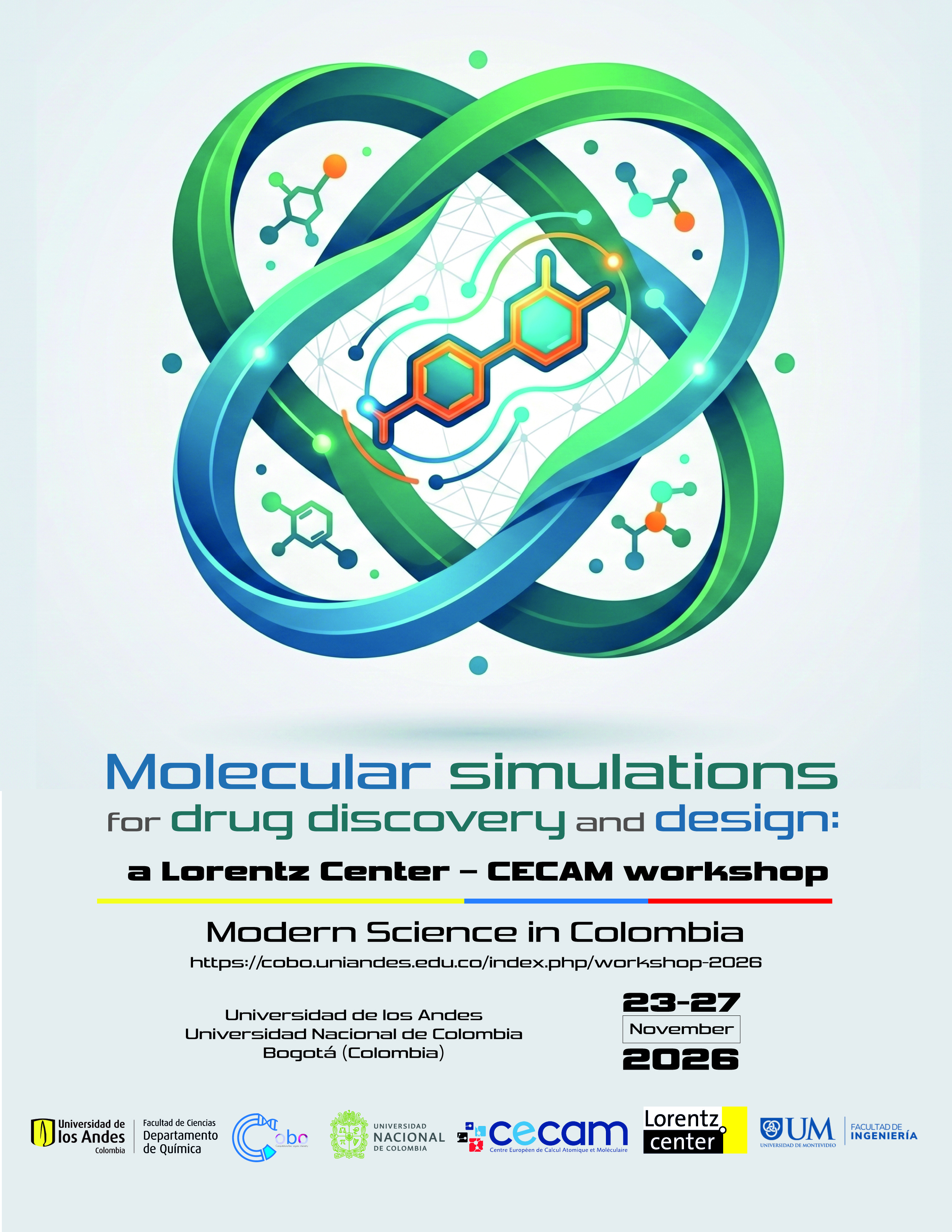
Registration is open (deadline: October 20), see the section "HOW" below for details
WHAT
an interactive five-day workshop featuring advanced molecular simulations, AI-driven drug design, and hands-on "hacking sessions" led by international experts.
Much more than traditional seminars: this event offers direct mentorship, open problem-solving, meeting with top international experts to share questions and learning new strategies.
And practical sessions on advanced methods including enhanced sampling, QM/MM simulations, free energy calculations.
It is a unique chance for the local computational community!
WHEN
November 23-27, 2026 (Monday through Friday)
WHO
40 participants (PhD students, postdoc, professors, master students, researchers) and top senior researchers from Europe, USA and South America.
Senior invited researchers
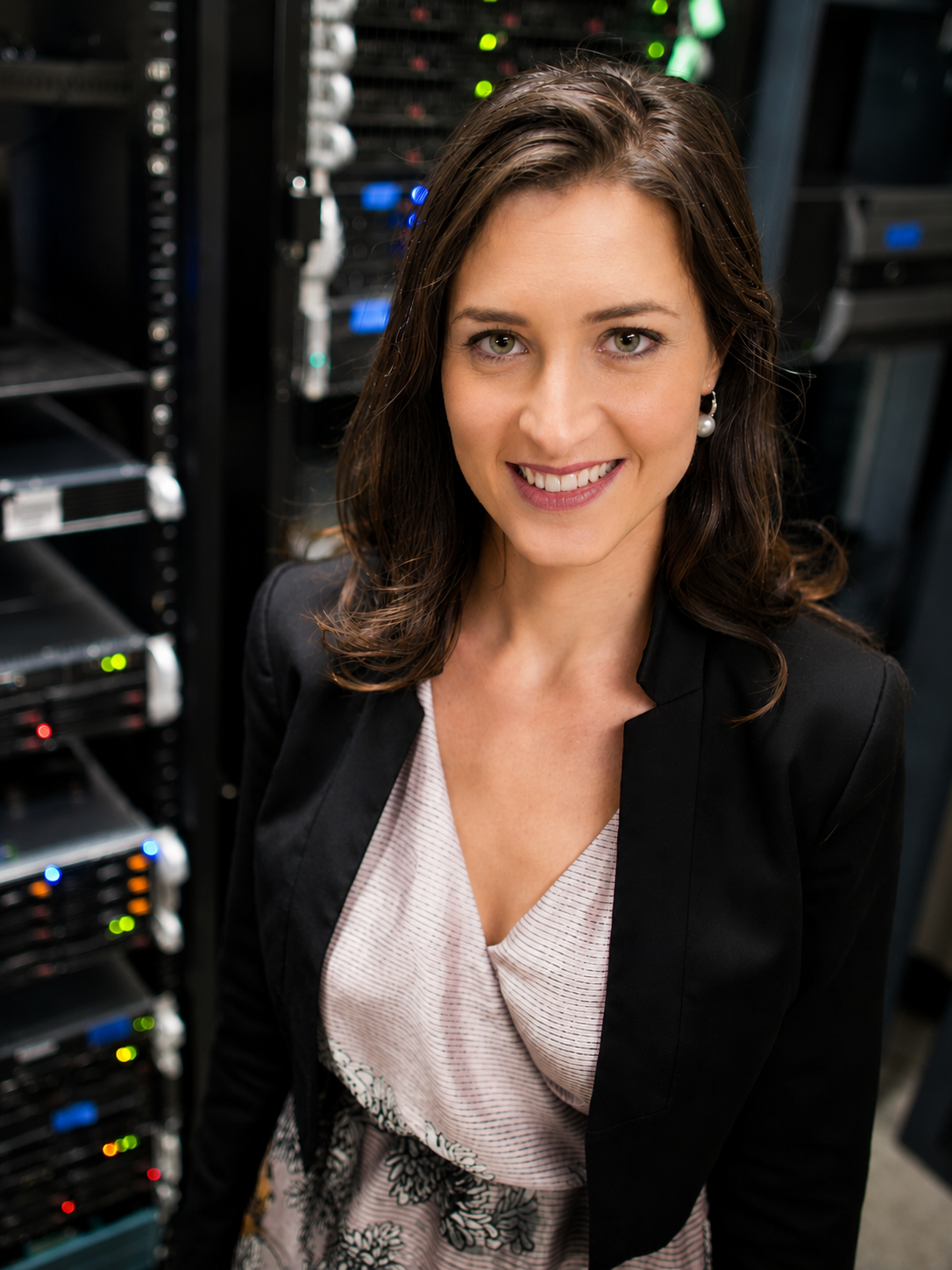
Prof. Giulia Palermo
Department of Bioengineering and Chemistry - University of California Riverside (USA)
Giulia Palermo is a computational biophysicist and professor of Chemistry and Biochemistry. Her research group is best known for pioneering computational studies of CRISPR-Cas genome-editing systems. By developing and applying cutting-edge molecular simulations and artificial intelligence approaches, her laboratory investigates the molecular mechanisms underlying genome editing and uses these insights to help engineer innovative technologies. Palermo is a Camille Dreyfus Teacher-Scholar and has received several honors, including the NSF CAREER Award, the Sloan Research Fellowship in Chemistry, and the Corwin Hansch Award for Outstanding Scientists Under 40.
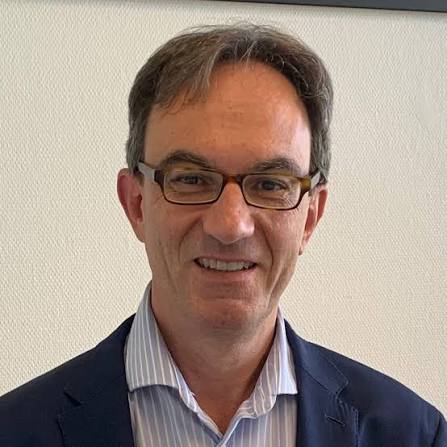
Prof. Andrea Cavalli
Director of CECAM (Centre Européen de Calcul Atomique et Moléculaire) at École Polytechnique Fédérale de Lausanne (Switzerland)
Professor Andrea Cavalli is the Director of CECAM. His research integrates computational physics and chemistry with drug discovery, primarily focusing on cancer. He has developed and applied advanced algorithms and protocols for estimating binding free energy using enhanced sampling molecular dynamics (MD) simulations. In anticancer drug discovery, his group leverages this approach to identify molecules capable of inducing synthetic lethality, advancing precision medicine treatments. These studies are carried out in collaboration with hospitals, bridging rational drug design with (pre)clinical applications
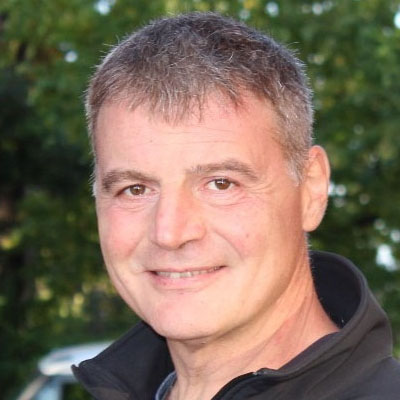
Prof. Fabio Polticelli
Department of Sciences - University Roma Tre (Italy)
Fabio Polticelli is Full Professor of Biochemistry at the University Roma Tre in Rome (Italy). He holds a Ph.D. in Biochemistry from La Sapienza University of Rome (1993) and gained international experience as a postdoc at the Medical Research Council in Didcot (UK) (1994-1995) and at Columbia University in New York (1998-2000). Since 2000 he joined the University Roma Tre where he is currently the Head of the Theoretical Biology and Bioinformatics Lab. His current research interests include: - Development of databases and software tools for protein function recognition, binding pockets detection, virtual screening and drug design. - In silico structural and functional studies of membrane transporters. - Computational design of therapeutic antibodies against cancer targets. Fabio Polticelli is the author of more than 220 articles in international peer-reviewed scientific journals (h-index=43, total number of citations >5800).
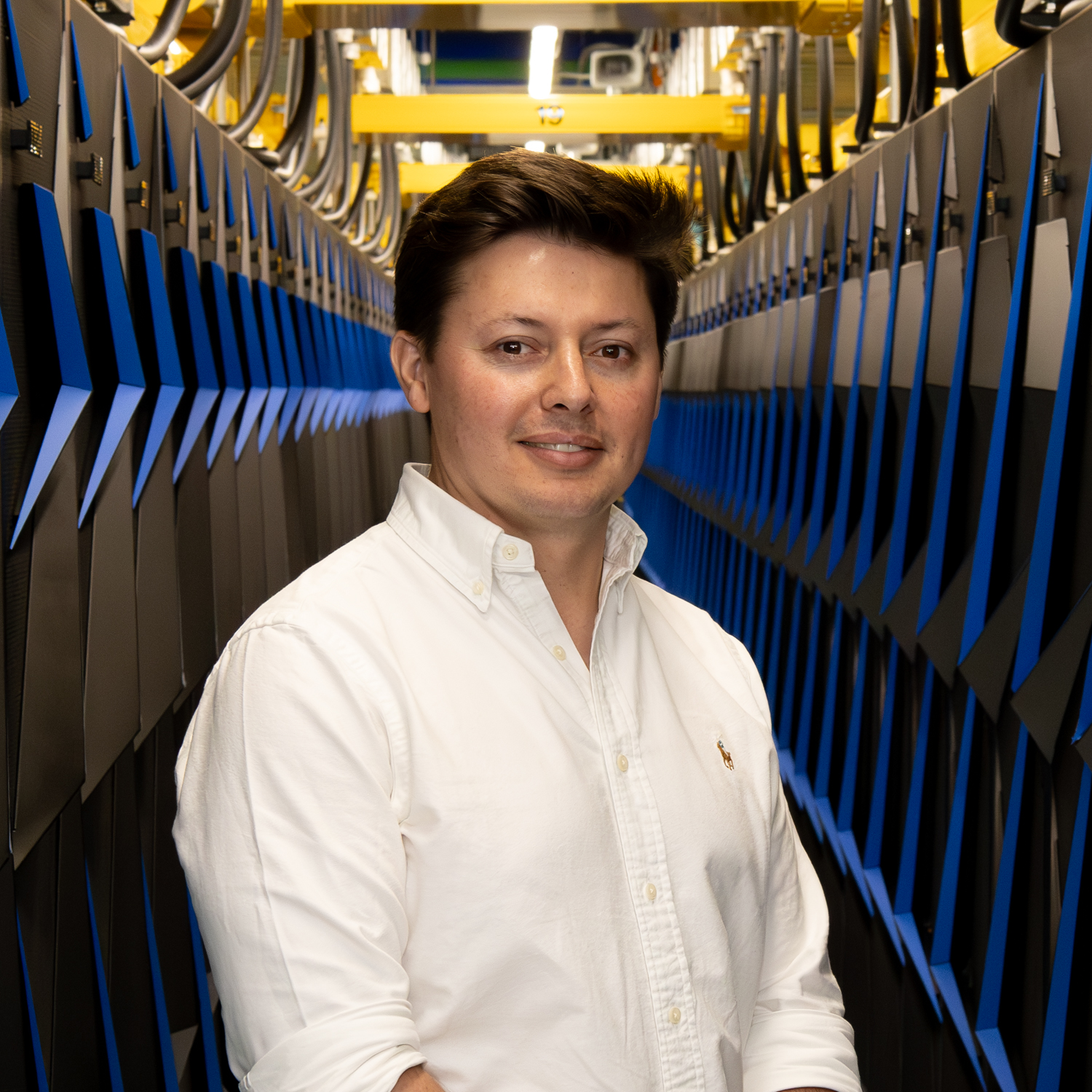
Dr. Fernando Posada
Oak Ridge National Laboratory (USA)
Edwin Fernando Posada Correa is the group leader of System Acceptance & User Environment at the National Center for Computational Sciences of Oak Ridge National Laboratory (ORNL), where he leads activities related to software environments, system acceptance, and user support for high-performance computing platforms. His academic career began at the National University of Colombia, where he specialized in theoretical and computational chemistry, working on the development and optimization of APMO and, subsequently, nAPMO methodologies for the quantum-mechanical study of multicomponent systems. This work sparked his interest in high-performance computing, which he further pursued through the Master in High Performance Computing program at ICTP/SISSA in Italy. His areas of expertise include HPC, scientific software, accelerated architectures, programming environments, and validation of supercomputing systems.

Dr. Pietro Vidossich
Italian Institute of Technology, Genoa (Italy)
Pietro Vidossich obtained a bachelor’s degree in Chemistry from the University of Florence and a Ph.D. from the International School for Advanced Studies in Trieste. He held postdoctoral positions at the Barcelona Science Park (studying heme enzymes), at the Autonomous University of Barcelona (studying organometallic systems), at the German Research School for Simulation Sciences in Jülich (within the context of the Human Brain Project), and at the University of the Andes in Bogotá (studying organic and enzymatic reactions). He is now research technician at the Italian Institute of Technology in the laboratory of Molecular Modeling and Drug Discovery, where he uses state of the art molecular modeling techniques to investigate (bio)molecular recognition, protein conformational changes and enzymatic reaction mechanisms.
Dr. Néstor Aguirre
Amsterdam Model Suite (The Netherlands)
Dr. Adrian Leonardo Orjuela Rocha
Center for Biodiversity and Drug Discovery - Indicasat AIP (Panama)
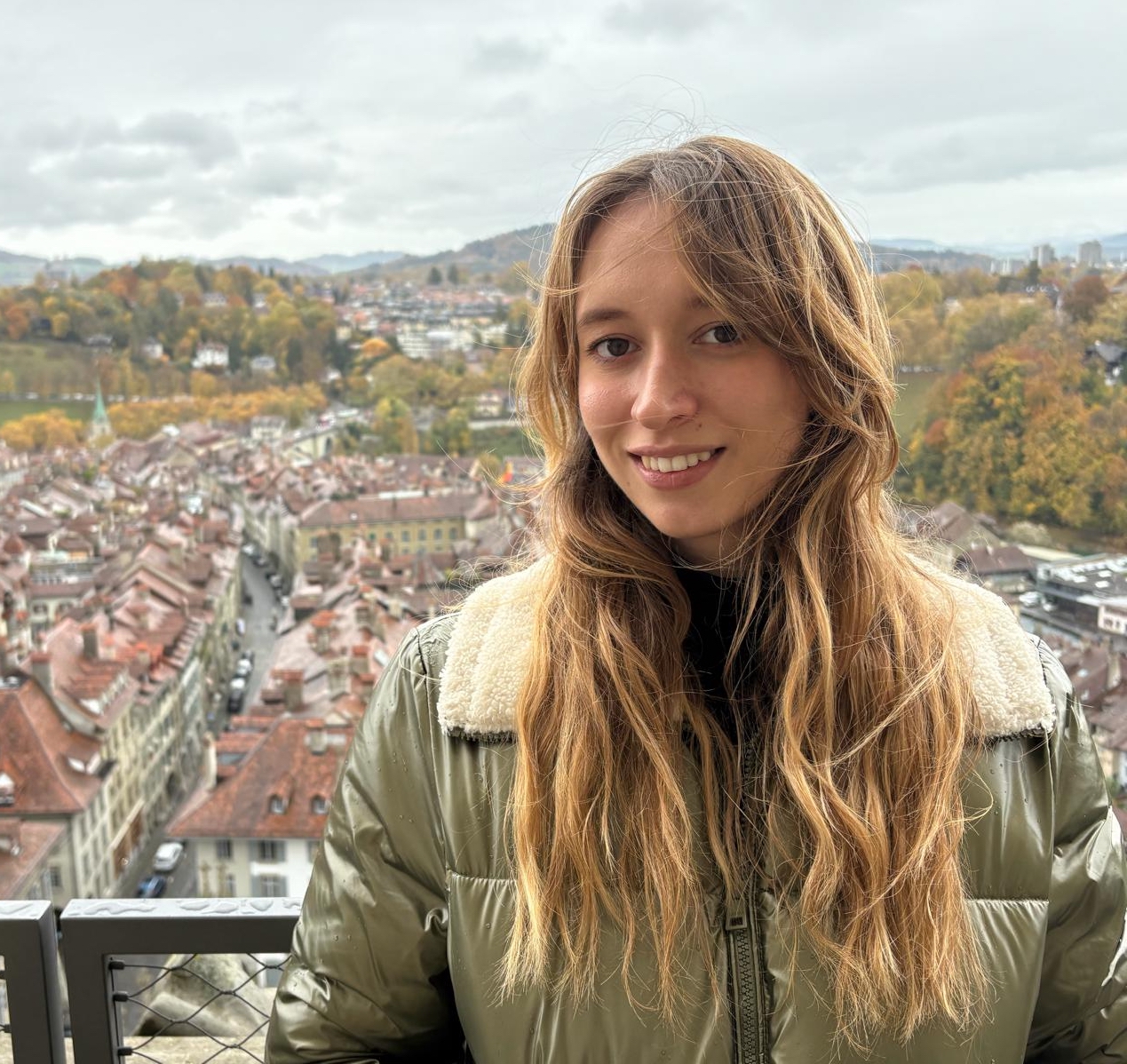
Alessia Ghidini
École Polytechnique Fédérale de Lausanne (Switzerland)
Alessia Ghidini is a PhD student under the supervision of Prof. Andrea Cavalli. She holds a BSc and an MSc in Chemistry from the University of Bologna. In 2024, she was a visiting student at the University of Chicago in the group of Prof. Benoît Roux. Her research in computational chemistry focuses on receptor–ligand binding, in particular on the development of methods for binding free energy calculations and absolute residence time predictions.
WHERE
Universidad de los Andes, Bogotá (Colombia)
Universidad Nacional de Colombia, Bogotá (Colombia)
WHY
it will be a unique opportunity to implement the latest computational breakthroughs and cutting-edge research workflows into your own projects, learning from world-class experts, to stay at the forefront of modern drug discovery and build lasting collaborations
HOW
Limited spots: first come, first served (registration closes on October 20).
Pre-registration is open: just click here (page of the science faculty of the Universidad de los Andes (just scroll down a little).
You will be then conctacted for the payment: fee: 95.000 COP (including 4 lunches at the cafeteria of Universidad de los Andes).
CECAM scholarships available to help cover travel and accommodation fees: 500.000 COP
To apply for the scholarship (deadline: October 20), please register and This email address is being protected from spambots. You need JavaScript enabled to view it. sending a 1-page document including your CV and a brief explanation of why you would like to participate.
For more information: email prof. Gian Pietro Miscione (This email address is being protected from spambots. You need JavaScript enabled to view it. )
Organizing Commitee
Prof. Gian Pietro Miscione
Universidad de los Andes (Colombia)
Prof. Jorge Alí-Torres
Universidad Nacional de Colombia (Colombia)
Prof. Margot Paulino Zunini
Universidad de la Republica, Montevideo (Uruguay)
Faculty of Engineering, Universidad de Montevideo (Uruguay)
Prof. Johan Fabian Galindo Cruz
Universidad Nacional de Colombia (Colombia)
Prof. Sara Luz Gómez Maya
Universidad Nacional de Colombia (Colombia)


